

PPAs
PPAs, in plain terms
PPA stands for Power Purchase Agreement. The basic idea is simple: buy electricity from whoever generates it, at a price agreed up front and over several years.
- Market price
- Price agreed in the PPA
An illustration of the principle. The shapes are not real prices and are not an offer.
Agreed does not necessarily mean flat: it can be a constant figure or follow an agreed formula. What changes is that it stops being a surprise.
The three parties
So what is it?
A consumer agrees to buy electricity from a generator (a solar farm, say) over several years, at a price the two of them set.
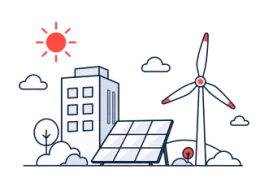
The generator
Someone with a plant (solar, wind) who wants predictable revenue for the years ahead.
The contract
How much energy, at what price, for how long, and who carries which risk. Negotiated case by case.
The buyer
Usually a business, wanting cost predictability and renewable energy whose origin can be identified.
It is a contract made to measure between two parties. Not a shelf tariff you pick off a list.
Scale and horizon
Who is it for?
Not for everyone, and it is fairer to say so early. A PPA pays off where there is scale, a long horizon, and a reason to lock the price.
- High and fairly steady consumption across the year
- Willingness to commit for several years
- Renewable energy targets that have to be demonstrated
- The means to review the contract with technical and legal support
At the end of the contract
And the plant, whose is it then?
This is the variant where the plant sits on your own roof, paid for by whoever installs it. During the contract you buy the electricity it produces. At the end, the plant can become yours.

During the contract
- You buy the electricity the plant produces, at the price agreed up front.
- The plant belongs to whoever installed it.
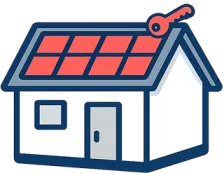
After
- The plant becomes yours.
- It keeps producing, with no PPA payment.
How it changes hands is written into the contract: it can be a transfer at the end of the term or an option to buy, at no cost or for a residual value. It is negotiated case by case, like the rest of the PPA.
Upsides and trade-offs
What to weigh before going ahead
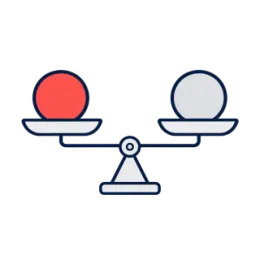
Almost everything good about a PPA carries a commitment on the other side, and often it is the same fact read twice. That is why they sit side by side rather than in two separate lists.
- one price, for years
What you gain
Predictable for years
You know what to budget for energy over a horizon in which the market can go anywhere. The electricity line stops being the one nobody can put a number on.
What you give in return
It is a long commitment
Several years is a long time for a business. What looks like a good price today may not in a few years, and the reverse is just as true.
- a price that will not move
What you gain
Shelters you from rises
If the market spikes, your price does not follow it up. That shelter is what a PPA sells.
What you give in return
And shuts you out of falls
If the market drops, you do not follow it down either. A PPA does not remove risk: it chooses which risk you would rather carry.
- one specific plant
What you gain
A traceable origin
The energy comes from a specific plant, with a name and a place, rather than from a faceless bundle. When you have to show where your electricity comes from, there is something to show.
What you give in return
Your consumption profile matters
A solar plant generates when the sun is out, not when the factory needs it. How that mismatch is handled is half the negotiation.
- a negotiated contract
What you gain
Built around your case
The term, the volume and the price are negotiated from your own consumption. It is not picked off a list of tariffs.
What you give in return
It is not a one-click decision
It is a management decision, with technical analysis and legal review. Any proposal that looks too simple deserves a second reading.
the third one decides.
Where Enbiente comes in
Is it worth it in your case?
Enbiente is a technical energy and sustainability company in Viseu. We help work out whether a PPA makes sense for you, structure the analysis, and connect the ends with whoever generates.
It starts with an honest conversation: if the right answer is a simple contract rather than a PPA, that is what we will tell you.